Narrative companion

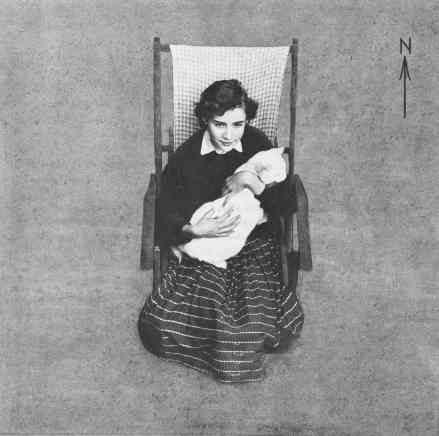
A girl in a chair,
and forty jumps later,
the edge of what we know.

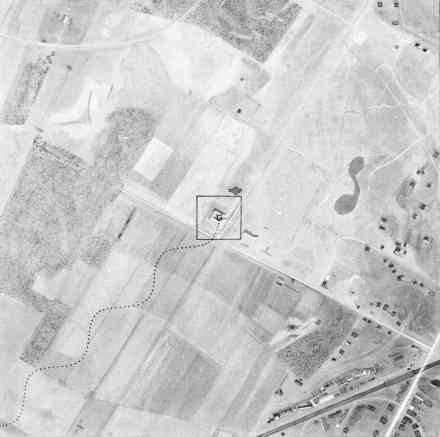
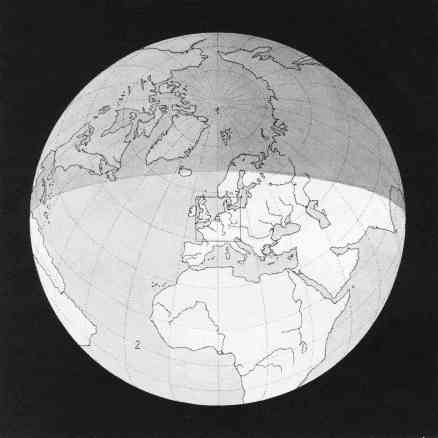
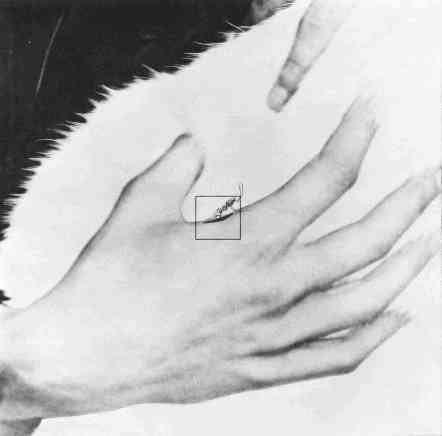
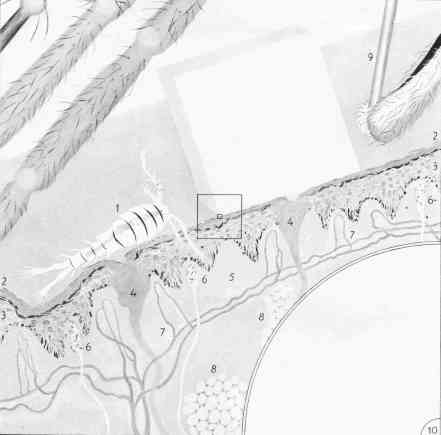
In 1957, a Dutch Quaker teacher named Kees Boeke drew the universe as a staircase. Forty steps up: a girl in a chair, a classroom, a city, a continent, the Earth, the solar system, the galactic arm, the observable cosmos. Forty steps down: skin, cell, chromosome, atom, nucleus, quark. Cosmic View became Ray and Charles Eames’ Powers of Ten, then the standard way we teach scale to children. It is still the most honest map we have.

PLANETAI stands inside that map and asks one impertinent question: at which of those jumps does someone actually have the authority to decide?

“The mind is staggered to discover that in this vast panorama there are still scales within scales, that each magnification opens a new horizon.” Kees Boeke · Cosmic View · 1957

I · The cascade

Above — biology governs.
Below — governance is absent.

Boeke’s forty jumps are real, but jurisdiction is not. Between the atom and the galaxy there is exactly one band where a human being — a neighbourhood, a mayor, a regional government, a bioregional council, a planetary body — can look at a measurement and do something about it. That band is five orders of magnitude wide. Everything above is physics. Everything below is biology. In between is the only place politics still works.

Scale cascade Five tiers · thirty-five faded
10+26 m · +40 Observable universe · horizon observation only
10+21 m · +35 Local galactic supercluster observation only
10+16 m · +30 Interstellar medium observation only
10+11 m · +25 Inner solar system observation only
10+8 m · +21 Earth–Moon system observation only
10+7 m · +19 Planet — the biosphere Tier 1 · jurisdiction
10+6 m · +16 Bioregion — watershed, foodshed, ecoregion Tier 2 · jurisdiction
10+5 m · +14 Region — multi-city, state, supply-chain layer Tier 3 · jurisdiction
10+4 m · +13 City — the metabolic unit Tier 4 · jurisdiction
10+2 m · +10 Community — fab-lab shed, block, school Tier 5 · jurisdiction
10+1 m · +8 Home · body · hand biology + privacy · the individual antecedent
10-3 m · +3 Tissue · millimetre biology governs
10-6 m · −1 Cell biology governs
10-9 m · −6 Protein · enzyme AlphaFold territory
10-10 m · −8 Atom physics governs
10-18 m · −16 Quark physics governs
Lit rows · where authority sits and measurement closes into action. Faded rows · observation without jurisdiction.

II · Five tiers

The span of
human collective authority.

Not five arbitrary zoom levels. Five scales at which a decision can be made and enforced — by a planetary treaty, a watershed council, a regional government, a municipal budget, a neighbourhood workshop. Drop any one of these and the chain of responsibility breaks. PLANETAI is designed to refuse that drop. (Per the Full Stack Metrics Framework [Vivanco 2024]: the five canonical scales of the Fab City Full Stack.)

Tier 1 · 107 m

Planet

The biosphere as a single unit of accounting. Earth foundation models (Aurora, GraphCast, GenCast) provide the upper bound: what the atmosphere and oceans are doing to us, at hourly-to-decadal cadence.

Who decides · planetary bodies, treaties

Tier 2 · 106 m

Bioregion

A watershed, foodshed, ecoregion. Defined ecologically, not administratively. Data ingress and model training happen here — crossing no other border — so that a Barcelona pilot never leaks its citizens’ sensors into a Bali server.

Who decides · bioregional councils, treaties of land

Tier 3 · 105 m

Region

The multi-city / state / province layer. Where governance and supply-chain coordination actually live. Generalitat de Catalunya for Pilot 0; the equivalent state-level publishers for Boston, Santiago, Bali. The OpenData.cat MCP runs at this tier.

Who decides · regional governments, inter-municipal bodies

Tier 4 · 104 m

City

The dense metabolic knot. Imports, waste, flows, labour, permits. Where the four pillars — Environmental, Social, Economic, and Governance — first become the same conversation because the same mayor has to answer for all four.

Who decides · municipalities, councils

Tier 5 · 102 m

Community

The fab-lab shed, the block, the school, the civic workshop. 1,000–50,000 people. Where a sensor gets calibrated, a part gets printed, a repair gets logged. The smallest scale at which collective authority still assembles. Personal Knowledge Containers (Koo et al. 2023) sit adjacent as the individual antecedent that PLANETAI extends upward through architecture.

Who decides · assemblies, workshops, schools, councils

III · The seed

What sits above, what sits below.

Five tiers is the whole span of collective authority, but it is not the whole story. Above the planet — orbit, heliosphere, galaxy — is what we can observe but not govern. Satellites see hurricanes before mayors do. We treat that as a gift, not a jurisdiction.

Below the community is what we can model but not legislate. Proteins fold the way they fold. Atoms do not take votes. DeepMind’s AlphaFold resolved the shape of nearly every known protein — 200 million structures — and gave them to the world as a public reference. That is a beautiful thing. It is also, precisely, observation without jurisdiction. No one is going to call a town meeting about a hydrogen bond. (Personal data — what happens at home, on the body, in the hand — lives in this band too: PKC architecture lets it contribute upward when its owner says so, but it is not a separate jurisdiction.)

PLANETAI borrows the representation lesson from that work — shared embeddings across a hierarchy of scales, the Matryoshka trick that lets a single model serve many resolutions — and refuses to import its peer-instrument status. We are not a protein database. We are the layer where measurement has to meet a mayor.

Boeke drew the cosmos to teach children scale.
We are borrowing his staircase to ask a harder question.

Not how big is the universe, but how far can a decision travel — from a sensor on a balcony in Poblenou to a planetary boundary, and back again, fast enough to matter. Five tiers is the answer. Everything else is preface.

Return to PLANETAI · or open the observatory Fab City Foundation · April 2026